
Natural Stone vs. Engineered Stone: Which One Is Right for Your Project?
Natural Stone vs. Engineered Stone: Which One Is Right for Your Project?
When it comes to choosing stone for a home or commercial project, one of the first questions we hear is:
“Should I go with natural stone or engineered stone?”
Designers, builders, and homeowners all face this decision — especially for kitchens, bathrooms, and other high-impact spaces like fireplaces and backsplashes. The truth is, there’s no single right answer. The best choice depends on how the space will be used, the overall design vision, and what matters most to you in the long run.
Let’s break it down in a simple, practical way.
What Is Natural Stone?
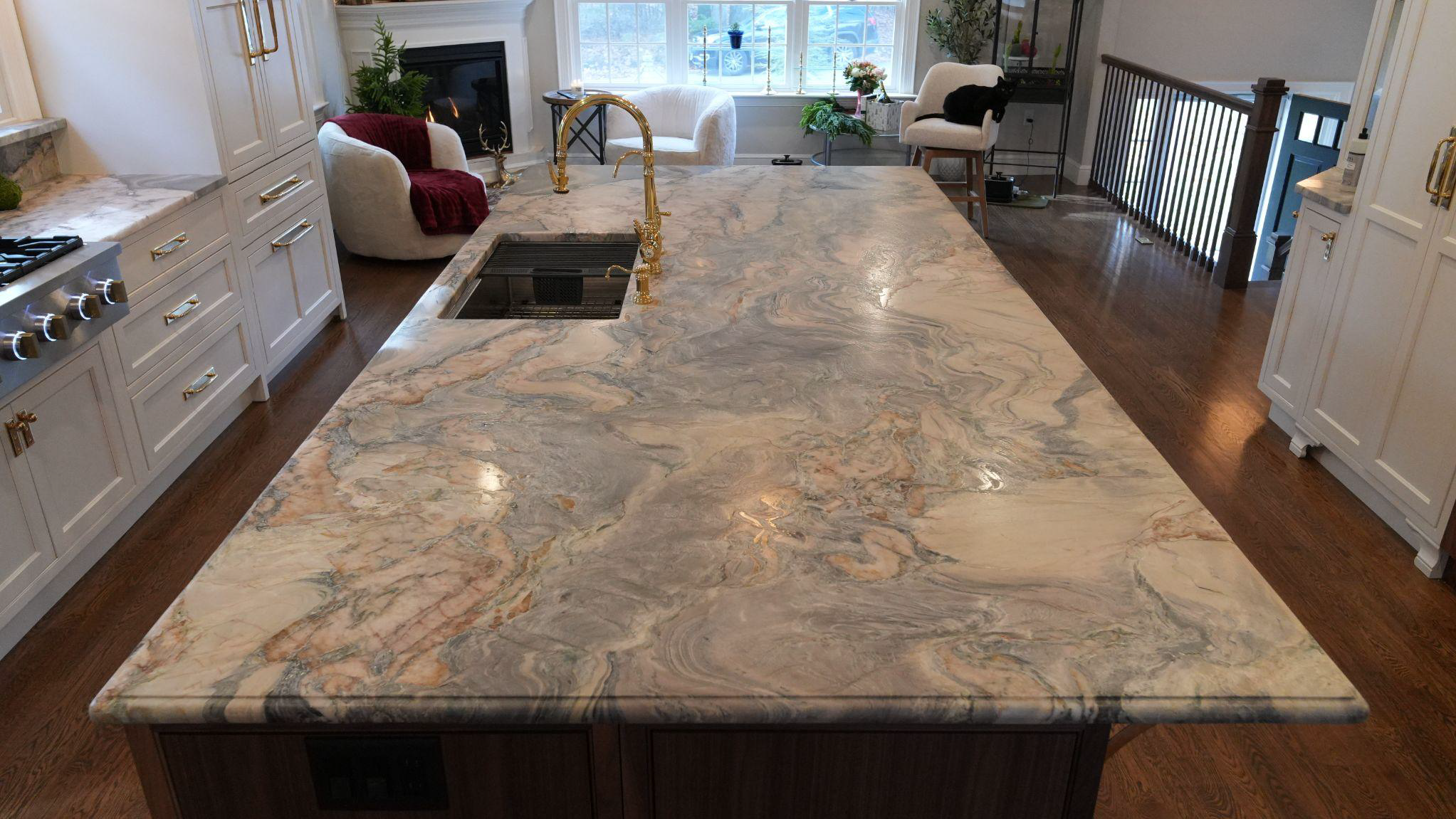
Natural stone is exactly what it sounds like — stone that comes straight from the earth and is cut into slabs. Materials like granite, marble, quartzite, and soapstone fall into this category.
Each slab of natural stone is unique. No two are ever the same, which is a big part of its appeal.
Why people love natural stone
● One-of-a-kind patterns and veining
● Timeless beauty that never feels manufactured
● Adds character and value to a space
● Ages naturally over time
Natural stone countertops are especially popular in kitchens and bathrooms where the goal is to create a space that feels organic, warm, and elevated.
Things to consider
● Some stones require sealing and routine care
● Natural variation means color and pattern will differ from slab to slab
● Certain stones are better suited for specific applications
What Is Engineered Stone?
Engineered stone (most commonly quartz) is made by combining natural stone particles with resins and pigments. The result is a surface that’s consistent, durable, and easy to maintain.
Because it’s manufactured, engineered stone offers more control over color and pattern.
Why people choose engineered stone
● Very consistent appearance
● Low maintenance — no sealing required
● Strong resistance to stains
● Great for busy kitchens and bathrooms
Engineered stone countertops are often chosen for projects where durability and predictability are key priorities.
Things to consider
● Less natural movement and variation
● Doesn’t develop the same natural patina over time
● Not always ideal for outdoor or high-heat areas
How to Choose What’s Right for Your Project
Instead of asking “Which stone is better?”, a more helpful question is:
“Which stone works best for this specific space?”
Here are a few things we help clients think through:
● Kitchen countertops: Quartzite and granite offer natural beauty with durability, while quartz provides consistency and easy care.
● Bathroom vanities & showers: Both natural and engineered stone work well — the choice often comes down to design style and maintenance preferences.
● Fireplaces & feature walls: Natural stone is often favored for its depth, movement, and visual impact.
● Design intent: If uniqueness and character matter most, natural stone usually wins. If uniformity and simplicity are key, engineered stone may be the better fit.
A Final Thought
Both natural stone and engineered stone have a place in today’s projects — and both can look stunning when chosen and fabricated correctly. What truly makes the difference is how the stone is selected, fabricated, and installed.
If you’re planning a project and would like guidance on which material makes the most sense for your space, we’re always happy to help. Whether you’re early in the design phase or ready to move forward, our team works closely with designers, builders, and homeowners to turn ideas into beautifully finished stone surfaces.
Add a comment